
Managing money can feel difficult when you have bills to pay, savings goals to achieve, and everyday expenses to cover. Without a clear plan, it is easy to spend more than expected and struggle to save money at the end of the month. The 50/30/20 budget rule offers a simple way to organize your income and make better financial decisions.
This budgeting method divides your monthly take-home income into three main categories: needs, wants, and savings or debt repayment. Instead of tracking hundreds of individual spending decisions without a plan, you can use these percentages as a starting point for managing your money.
In this guide, you will learn how the 50/30/20 budget rule works, how to calculate each category, and how to apply it to different income levels. You will also discover its benefits, limitations, and practical ways to adjust the method to your financial situation.
What Is the 50/30/20 Budget Rule?
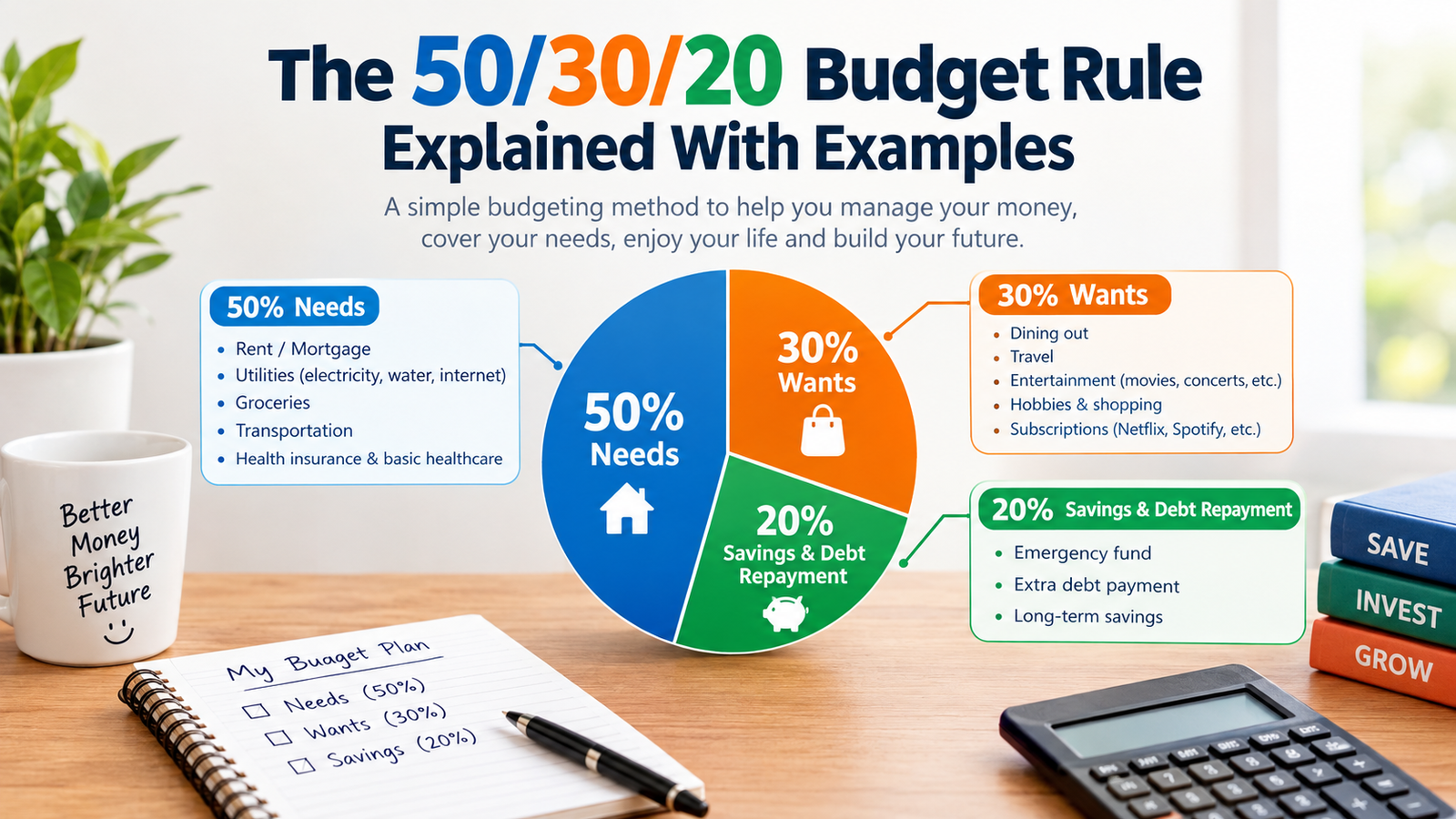
The 50/30/20 budget rule is a budgeting method that divides your after-tax income into three categories.
- 50% for needs: Essential expenses required for daily living and financial responsibilities.
- 30% for wants: Nonessential purchases and activities that improve your lifestyle.
- 20% for savings and debt repayment: Money reserved for future goals, emergency savings, and additional payments toward debt.
The main purpose of this method is to create a balance between covering essential expenses, enjoying your income, and preparing for the future.
For example, if your monthly take-home income is $3,000, the suggested allocation would be $1,500 for needs, $900 for wants, and $600 for savings and debt repayment.
These percentages are guidelines rather than strict rules. Your housing costs, family responsibilities, location, and financial goals may require a different allocation.
How Does the 50/30/20 Budget Rule Work?
To use this method, start with your monthly income after taxes and other payroll deductions. If you are self-employed, estimate the amount available for personal use after setting aside money for taxes and business expenses.
Next, divide that income into the three categories.
1. Allocate 50% to Needs
Needs are expenses you must generally pay to maintain your household, meet basic living requirements, and fulfill important financial obligations.
Common examples include:
- Rent or mortgage payments
- Basic groceries
- Electricity, water, and heating
- Essential transportation
- Health insurance and necessary healthcare
- Basic phone and internet services
- Minimum required debt payments
- Necessary childcare expenses
The goal is to keep these essential costs near half of your take-home income when practical.
However, some people live in areas where housing and transportation costs make this target difficult to achieve. If your essential expenses exceed 50%, do not ignore necessary bills simply to meet the formula. Instead, review your budget and determine whether other categories can be adjusted.
2. Allocate 30% to Wants
Wants are purchases and activities that are not essential for meeting your basic needs. They can make life more enjoyable, but you usually have more flexibility over when and how much you spend on them.
Examples include:
- Restaurant meals and takeaway food
- Entertainment and streaming subscriptions
- Hobbies and recreational activities
- Nonessential clothing
- Vacations and leisure travel
- Upgrading electronics when your current device still works
- Optional memberships and premium services
The distinction between a need and a want depends on the circumstances. For example, basic internet access may be necessary for work or education, while paying extra for a premium entertainment package may be optional.
The purpose of this category is not to eliminate enjoyable spending. It is to give yourself a reasonable limit so that lifestyle expenses do not interfere with essential bills and savings.
3. Allocate 20% to Savings and Debt Repayment
The final 20% is intended to strengthen your financial position and help you prepare for future expenses.
You might use this portion for:
- Building an emergency fund
- Saving for a major purchase
- Contributing toward retirement
- Saving for education or future plans
- Making additional payments on high-interest debt
- Investing for long-term goals when appropriate
If you do not have emergency savings, building an initial cash reserve can be a useful priority. Once you have some protection against unexpected expenses, you can decide how to divide this category between further savings, debt repayment, and long-term goals.
Required minimum debt payments are generally included under needs in this budgeting framework. Additional debt payments can be assigned to the savings and debt repayment category.
Remember that investing involves risk, and money needed for near-term expenses should not automatically be placed in investments that can lose value.
The 50/30/20 Budget Rule: Example With a $3,000 Monthly Income
Suppose you receive $3,000 per month after taxes. Here is how the 50/30/20 rule would divide your income.
| Budget category | Percentage | Monthly amount |
|---|---|---|
| Needs | 50% | $1,500 |
| Wants | 30% | $900 |
| Savings and debt repayment | 20% | $600 |
| Total | 100% | $3,000 |
In this example, you would aim to keep essential expenses within $1,500, flexible lifestyle spending within $900, and savings or additional debt payments at $600.
Your actual expenses may not fit these percentages perfectly. Use the table as a starting point and make adjustments based on your circumstances.
Example of a Monthly Spending Plan
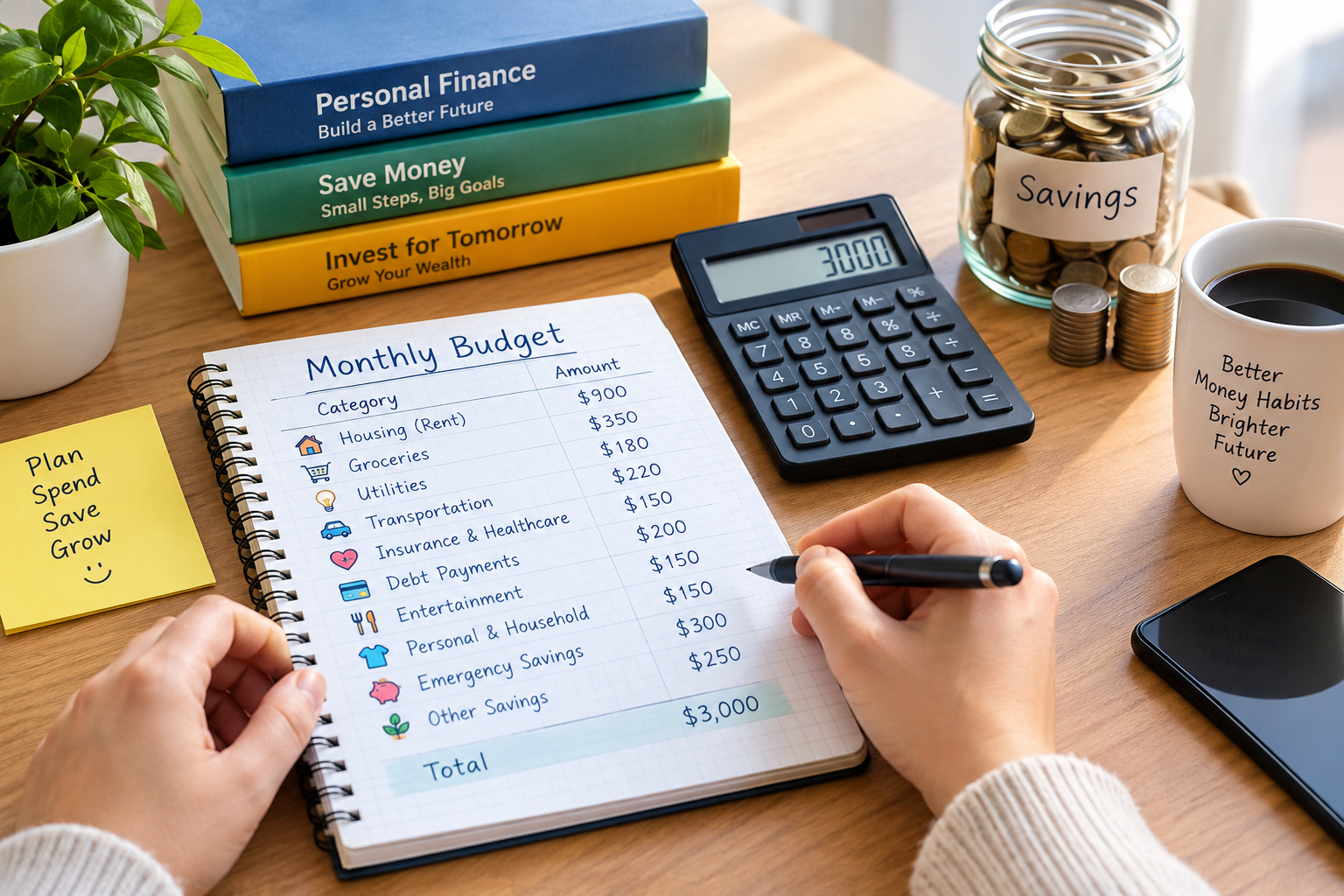
Here is a hypothetical budget showing how the three categories might work in practice.
| Category | Example expenses | Amount |
|---|---|---|
| Needs | Housing | $800 |
| Needs | Groceries | $300 |
| Needs | Utilities and phone | $120 |
| Needs | Transportation | $130 |
| Needs | Healthcare and minimum debt payments | $150 |
| Total needs | $1,500 | |
| Wants | Dining and entertainment | $250 |
| Wants | Shopping and hobbies | $200 |
| Wants | Subscriptions and leisure | $100 |
| Wants | Travel and other personal activities | $350 |
| Total wants | $900 | |
| Savings and debt repayment | Emergency fund | $250 |
| Savings and debt repayment | Long-term savings or investing | $200 |
| Savings and debt repayment | Additional debt repayment | $150 |
| Total savings and debt repayment | $600 | |
| Grand total | $3,000 |
This example demonstrates how the formula can be translated into a practical monthly plan. The individual amounts are illustrative and should not be treated as universal recommendations.
50/30/20 Budget Examples for Different Income Levels
The same percentages can be applied to different levels of take-home income.
| Monthly take-home income | 50% Needs | 30% Wants | 20% Savings and debt |
|---|---|---|---|
| $1,500 | $750 | $450 | $300 |
| $2,000 | $1,000 | $600 | $400 |
| $3,000 | $1,500 | $900 | $600 |
| $4,000 | $2,000 | $1,200 | $800 |
| $5,000 | $2,500 | $1,500 | $1,000 |
| $6,000 | $3,000 | $1,800 | $1,200 |
These figures show the mathematical allocation, not a guarantee that the suggested amounts will cover essential expenses in every location.
For example, a person earning $2,000 per month might find that rent alone consumes a large part of the recommended needs category. In that situation, a modified budget may be more realistic than forcing spending into the original percentages.
How to Calculate Your 50/30/20 Budget
You can calculate your budget with three simple steps.
Step 1: Find your monthly take-home income.
Use the money you actually have available after taxes and relevant payroll deductions.
Step 2: Multiply your income by each percentage.
Use these formulas:
- Needs budget = Monthly take-home income × 0.50
- Wants budget = Monthly take-home income × 0.30
- Savings and debt budget = Monthly take-home income × 0.20
Step 3: Compare your actual expenses with the targets.
List your regular bills and spending. Add up the expenses in each category and compare the totals with your calculated limits.
If you discover that your essential expenses exceed the suggested 50%, consider adjusting flexible spending first. You can also look for realistic ways to reduce major costs or increase your income.
Example Calculation
If your monthly take-home income is $4,000:
- Needs: $4,000 × 0.50 = $2,000
- Wants: $4,000 × 0.30 = $1,200
- Savings and debt repayment: $4,000 × 0.20 = $800
Together, these amounts equal $4,000, meaning the full income has been assigned a purpose.
How to Start Using the 50/30/20 Rule
Following the formula becomes easier when you turn it into a regular financial routine.
Step 1: Review Your Recent Spending
Check your bank statements, payment records, receipts, and budgeting app. Estimate how much you currently spend on housing, food, transportation, entertainment, and other expenses.
Accurate information helps you build a realistic budget instead of relying on guesses.
Step 2: Separate Needs From Wants
Review each expense and decide whether it is essential, optional, or somewhere in between.
For instance, basic groceries are a need, but frequent restaurant meals are generally a want. A reliable vehicle may be necessary for commuting, while an expensive upgrade may be optional.
Some costs can be divided between categories depending on how they are used.
Step 3: Set Your Savings Goal
Decide what you want the 20% category to accomplish. Your first priority might be an emergency fund, or you might need to focus on expensive debt.
If you cannot afford to save 20% immediately, start with an amount that fits your current budget and work toward a more sustainable allocation over time.
Step 4: Set Spending Limits
Give each category a clear monthly limit. You can divide the wants category into smaller groups, such as dining, entertainment, shopping, and hobbies.
Smaller limits make it easier to identify where spending is increasing.
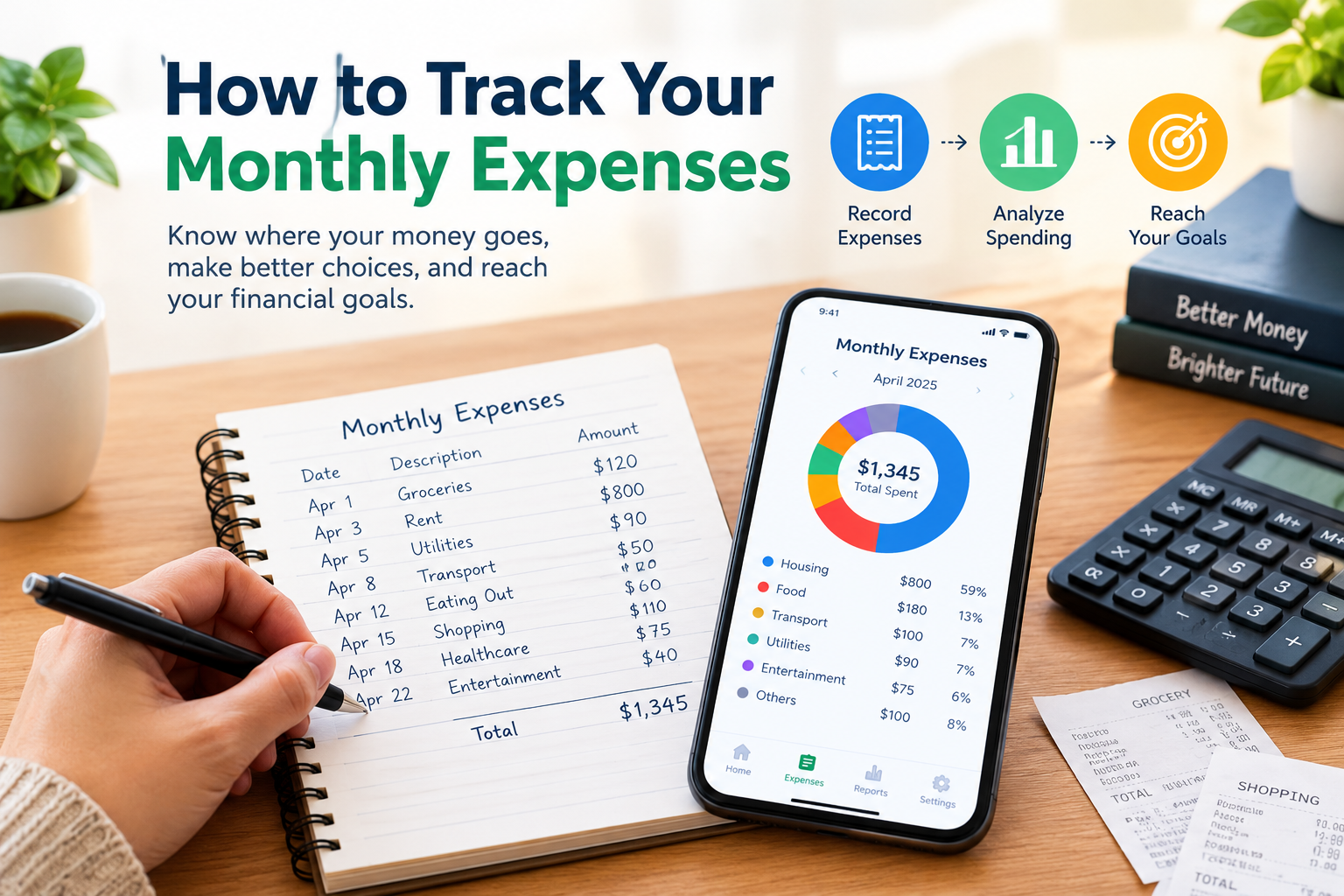
Step 5: Track Your Progress
Record your spending throughout the month and compare it with your plan. A spreadsheet, notebook, or budgeting application can help you keep track.
Review your progress weekly so you can make adjustments before the month ends.
Step 6: Review the Budget Monthly
At the end of each month, identify what worked and what needs to change. Adjust the percentages if your income, housing costs, debt obligations, or savings goals change.
A budget should reflect your real life rather than force you to follow numbers that are no longer practical.
Benefits of the 50/30/20 Budget Rule
This budgeting method offers several advantages, especially for people who are new to managing their money.
Easy to understand: The three categories are straightforward and do not require complicated financial calculations.
Flexible: You can apply the formula to different income levels and adjust it when your circumstances change.
Balances present and future needs: The method reserves money for current living expenses, enjoyable activities, and future financial goals.
Encourages saving: Setting a specific target makes saving a planned activity instead of something you do only when money remains.
Helps identify spending problems: Reviewing your categories can reveal when optional spending is taking money away from important priorities.
Supports financial awareness: Tracking expenses can help you make more informed decisions about purchases and financial commitments.
Limitations of the 50/30/20 Budget Rule
Although the method is useful, it does not work equally well for every household.
High Housing Costs
In some cities, rent or mortgage payments can consume considerably more than 50% of take-home income. The original allocation may therefore be unrealistic.
Low or Irregular Income
People with low or unpredictable earnings may need to prioritize basic living expenses before they can save 20% or spend 30% on wants.
Significant Debt
Someone with expensive debt may benefit from directing more available money toward repayment rather than following the standard percentages exactly.
Different Family Responsibilities
Childcare, healthcare, education, and support for relatives can create essential costs that vary widely between households.
Different Financial Goals
A person saving for a home deposit may want to save more than 20%, while someone managing a temporary financial setback may need to reduce their savings target.
The best approach is to use the 50/30/20 rule as a starting framework and adjust it to suit your needs.
Tips for Making the 50/30/20 Rule Work Better
You can make this method more effective with a few practical habits.
- Review your spending before setting your category limits.
- Plan for annual bills and irregular expenses by setting aside money each month.
- Reduce optional subscriptions or purchases that provide little value.
- Automate savings when your income and bill schedule allow it.
- Keep emergency savings accessible for genuine unexpected expenses.
- Avoid taking on new debt simply to maintain your preferred lifestyle.
- Recalculate your budget when your income or living costs change.
- Use realistic goals rather than expecting to change every spending habit at once.
If you share expenses with a partner or family, discuss the budget together so that everyone understands the household’s priorities.
Is the 50/30/20 Rule Better Than Other Budgeting Methods?
The best budgeting method depends on how much control you want and how complicated your finances are.
The 50/30/20 rule is a useful choice if you prefer a simple overview of your income. Zero-based budgeting may suit you better if you want to assign a purpose to every dollar. A pay-yourself-first approach may help if your main goal is to build consistent savings.
You can also combine methods. For example, you could use the 50/30/20 rule for your overall plan and use a detailed spreadsheet to track expenses within each category.
The most effective budget is one you can follow consistently and adjust when your circumstances change.
Frequently Asked Questions
Is the 50/30/20 rule based on gross income or net income?
It is generally based on take-home income after taxes and payroll deductions. This helps ensure that your budget reflects the money actually available for spending, saving, and debt repayment.
Can I use the 50/30/20 rule on a low income?
Yes, but the standard percentages may not be realistic if essential expenses consume most of your income. Prioritize basic needs and required payments, then work toward savings as your situation allows.
Does the 20% category include debt payments?
Required minimum debt payments are generally treated as needs. The 20% category can include additional debt repayment, savings, and investments, depending on your priorities.
What if my needs exceed 50% of my income?
Do not neglect essential bills to meet an arbitrary percentage. Review your wants category, explore ways to reduce major expenses where practical, and adjust the budget to match your circumstances.
Should I invest the entire 20%?
No. The category can be divided among emergency savings, other savings goals, additional debt repayment, and long-term investments. Your choices should reflect your financial priorities, time horizon, and ability to handle risk.
Can I save more than 20% of my income?
Yes. The rule is a guideline, not a maximum. If your essential expenses are low and you want to build savings faster, you can allocate more than 20% toward financial goals.
Final Thoughts
The 50/30/20 budget rule provides a straightforward way to organize your monthly income. By allocating 50% to needs, 30% to wants, and 20% to savings and debt repayment, you can create a clear starting point for managing your money.
The key is to understand your actual expenses, choose realistic limits, and review your progress regularly. If the standard percentages do not fit your financial situation, adjust them rather than abandoning budgeting altogether.
Start with the income you have today, make a practical plan, and improve it as your circumstances change. Consistent budgeting can help you develop stronger money habits and make more informed decisions about your financial future.
Disclaimer: This article provides general educational information and is not individualized financial advice. Your budgeting needs may vary based on your income, location, obligations, and financial goals.


Leave a Reply