
Creating a monthly budget is one of the most effective ways to manage your money, control spending, and work toward your financial goals. Whether you have a regular salary, freelance income, or an irregular source of earnings, a budget can help you understand where your money goes and how to use it more wisely.
Many beginners believe budgeting means giving up everything they enjoy. In reality, a good budget helps you balance essential expenses, personal spending, savings, and future plans. It gives you more control over your financial decisions without requiring complicated calculations.
In this guide, you will learn how to create a monthly budget step by step, track your expenses, avoid common budgeting mistakes, and build a financial plan that fits your lifestyle.
What Is a Monthly Budget?
A monthly budget is a plan that shows how much money you expect to earn, how much you plan to spend, and how much you want to save during a month.
It helps you compare your income with your expenses so you can make informed financial decisions. Instead of spending money without a clear plan, you assign a purpose to your income before the month begins.
For example, you might use part of your monthly income for rent, groceries, transportation, utility bills, savings, and entertainment. A budget helps you determine whether these expenses fit within your available money.
A monthly budget can also help you identify unnecessary spending, prepare for unexpected costs, and make progress toward goals such as building an emergency fund or paying off debt.
Why Is Monthly Budgeting Important?
Budgeting is useful for people at different income levels. You do not need to earn a large salary to benefit from a financial plan.
Here are some important benefits of creating a monthly budget:
- Better spending control: You can identify where your money goes and reduce expenses that do not support your priorities.
- Consistent saving: Setting aside money in advance makes saving a regular habit rather than an occasional activity.
- Less financial stress: Knowing that essential bills are covered can make money management feel more organized.
- Debt repayment: A budget helps you plan payments and avoid borrowing more than you can reasonably repay.
- Preparation for emergencies: You can gradually build savings for unexpected expenses, such as repairs or temporary income loss.
- Progress toward financial goals: A clear plan helps you work toward purchases, education, travel, or long-term financial security.
Budgeting does not guarantee that you will never experience financial difficulties. However, it can help you prepare for challenges and make better decisions with the resources available to you.
Step 1: Calculate Your Monthly Income
The first step in creating a budget is determining how much money you actually have available each month.
If you receive a regular salary, start with your take-home pay after taxes and other payroll deductions. This is generally more useful for budgeting than your gross salary because it represents the money you can spend or save.
If you earn money through freelancing, self-employment, commissions, or temporary work, your income may change from month to month. In that case, review your recent earnings and create a realistic estimate based on your income history.
Include reliable sources of income, such as:
- Salary or wages after deductions
- Freelance or self-employment earnings after setting aside money for taxes
- Regular business income available for personal use
- Other dependable income sources
Avoid building your budget around money you might earn in the future but have not received yet.
If your income varies, consider using a conservative estimate rather than assuming every month will be your best month. You can adjust your budget when your actual income becomes clear.
Step 2: List Your Monthly Expenses
After calculating your income, write down your expenses. Reviewing bank statements, receipts, payment records, and transaction histories can help you estimate your actual spending more accurately.
Divide your expenses into useful categories so you can see which costs are essential and which may be flexible.
Fixed Expenses
Fixed expenses are costs that generally stay the same or change very little each month.
Examples include:
- Rent or mortgage payments
- Insurance premiums
- Regular loan payments
- Subscription services with fixed fees
- Certain school or childcare payments
Although these expenses may be predictable, review them periodically to see whether you can reduce costs by changing plans or eliminating services you no longer need.
Variable Expenses
Variable expenses can change depending on your habits, usage, or circumstances.
Examples include:
- Groceries
- Electricity, water, and gas
- Transportation and fuel
- Dining out
- Clothing and personal care
- Entertainment
Some variable expenses are essential, while others are optional. For example, groceries are necessary, but the amount spent on takeaway meals may be flexible.
Occasional and Irregular Expenses
Do not forget expenses that occur only a few times each year. These costs can disrupt your budget if you ignore them.
Examples include annual insurance payments, vehicle maintenance, school supplies, holiday spending, and certain medical or household expenses.
Estimate the annual cost of each predictable expense and divide it by 12 to calculate a monthly amount to set aside.
For instance, if you expect to spend $600 on a particular annual expense, saving $50 each month can help you prepare for it.
Step 3: Choose a Budgeting Method
There is no single budgeting method that works for everyone. Choose one that matches your income, responsibilities, and financial goals.
The 50/30/20 Budget Rule
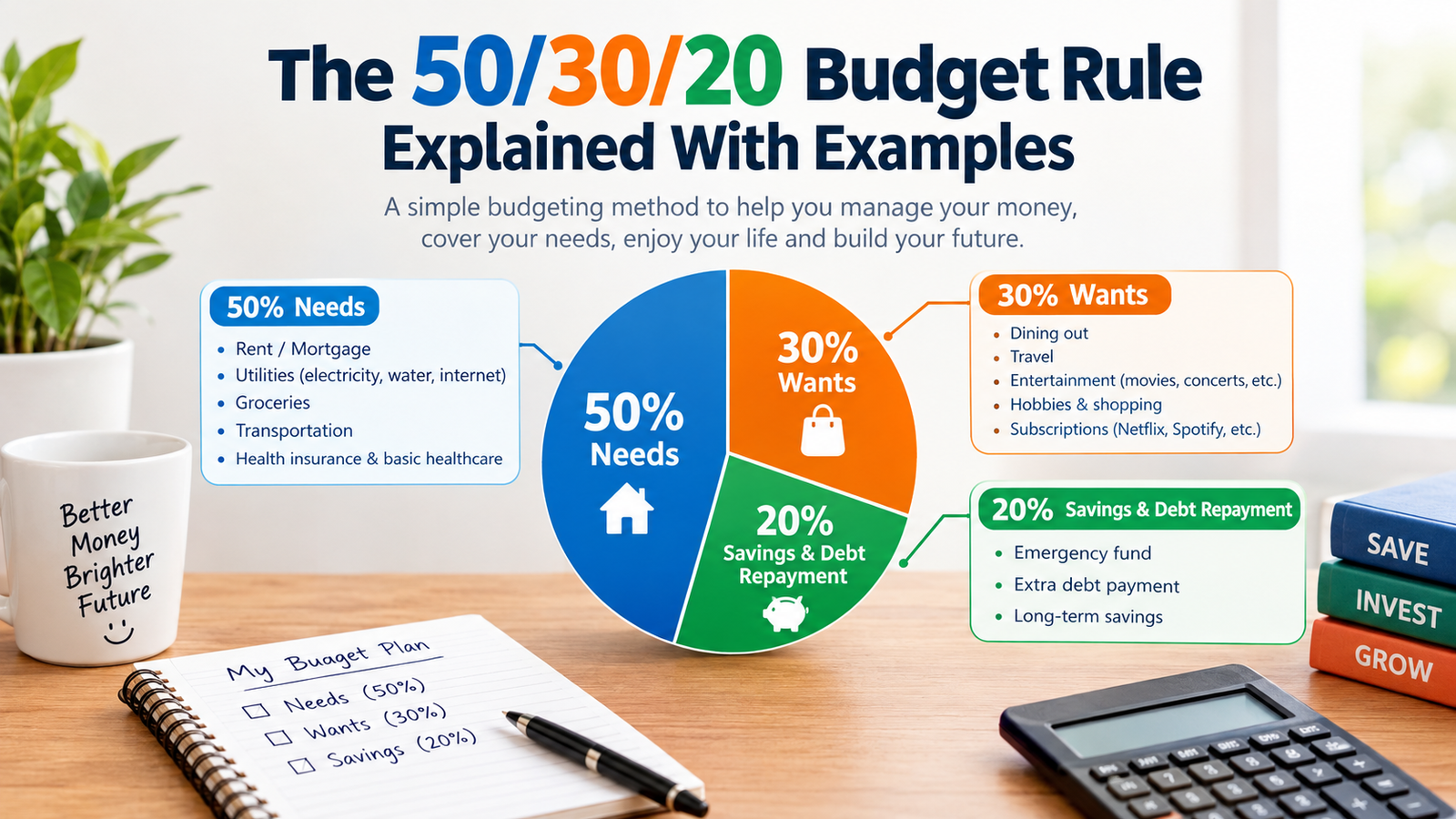
The 50/30/20 rule is a popular starting point for beginners. It divides take-home income into three broad groups:
- 50% for needs
- 30% for wants
- 20% for savings and debt repayment
Needs include essential expenses such as housing, basic groceries, utilities, and necessary transportation. Wants include optional purchases such as entertainment, dining out, and nonessential shopping. The final portion can support savings and additional debt payments.
These percentages are guidelines, not strict requirements. In expensive areas or during periods of lower income, essential expenses may take up more than half of your earnings.
Zero-Based Budgeting
With zero-based budgeting, you assign a purpose to every unit of your expected income. Your income minus your planned expenses, savings, and debt payments should equal zero.
This does not mean spending all your money. Savings and money reserved for future bills are also budget categories.
This method can be helpful if you want detailed control over where your money goes.
The Pay-Yourself-First Method
This method involves setting aside a planned amount for savings when you receive your income, then using the remaining money for bills and other expenses.
It can help people who struggle to save whatever happens to be left at the end of the month. However, make sure your essential bills and minimum debt payments remain affordable.
Step 4: Set Realistic Spending Limits
Once you choose a budgeting method, assign a spending limit to each category.
Start with your essential expenses and then determine how much you can reasonably spend on flexible categories. Use your actual spending history rather than choosing numbers that look good on paper.
For example, if you regularly spend $350 on groceries, setting a budget of $150 may be unrealistic unless you have a practical plan to reduce that expense.
Instead, identify specific changes that could help, such as planning meals, comparing prices, preparing food at home, or reducing food waste.
Your budget should reflect your real circumstances. If your income cannot cover basic needs, reducing entertainment spending alone may not solve the problem. You may also need to review major costs, explore available assistance, or consider ways to increase income.
Step 5: Make Savings Part of Your Budget
Savings should be included in your budget rather than treated as an afterthought.
Start by identifying one or two meaningful financial goals. For example, you might want to build an emergency fund, save for education, replace an appliance, or prepare for a planned move.
If you do not have emergency savings, consider building a small initial reserve and gradually increasing it as your financial situation allows. Over time, you can work toward an emergency fund that covers several months of essential expenses, depending on your circumstances.
If you have high-interest debt, balance your savings goals with the cost of that debt and the importance of keeping enough cash available for unexpected expenses.
You do not need to save a large amount immediately. Even a modest, consistent contribution can help establish the habit.
Step 6: Create a Monthly Budget Plan
Now combine your income, expenses, and savings goals into one plan.
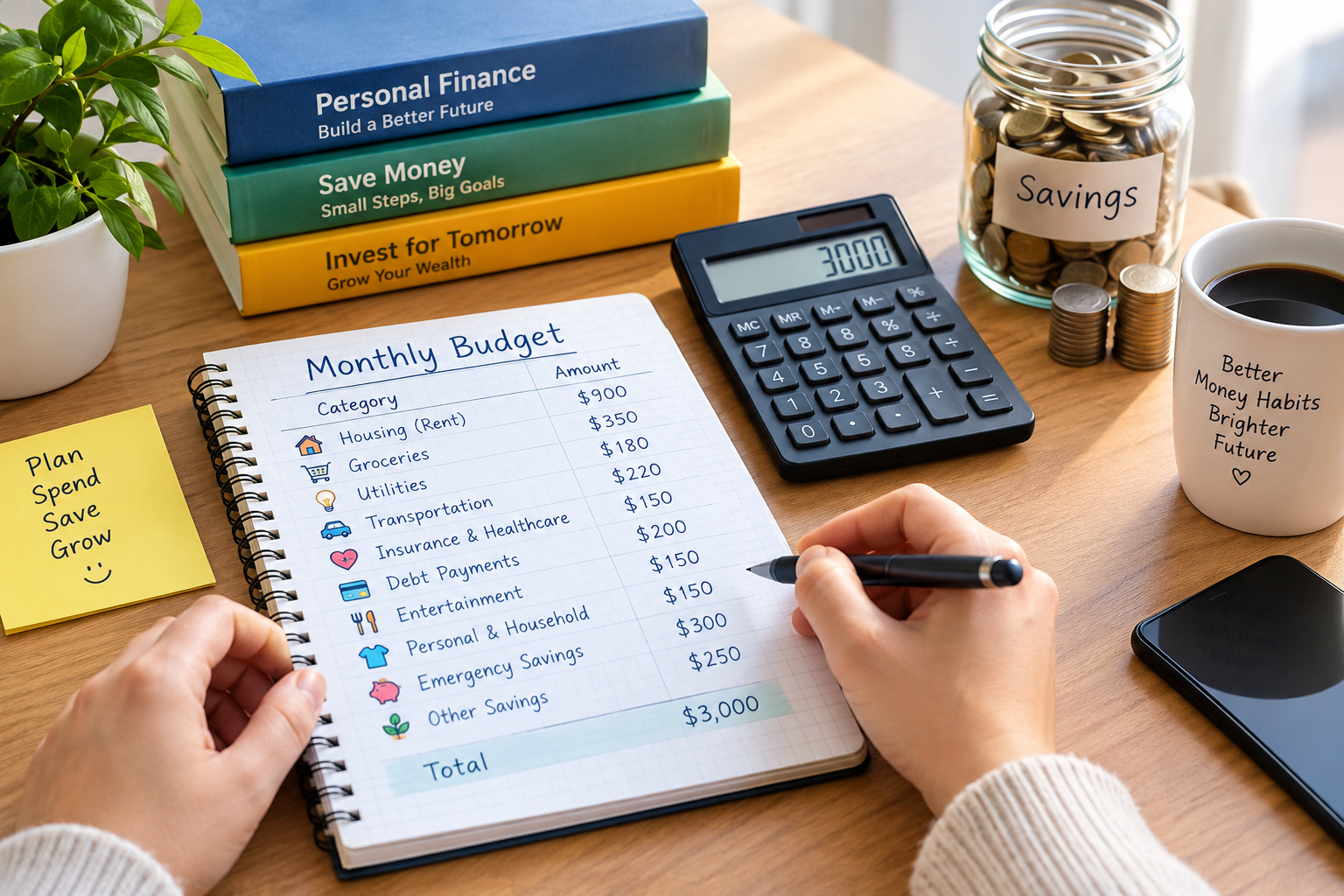
The following example uses a hypothetical monthly take-home income of $3,000. The amounts are illustrative and should be adjusted to match your location, household size, income, and financial responsibilities.
| Budget category | Monthly amount |
|---|---|
| Housing and rent | $900 |
| Groceries | $350 |
| Utilities and phone | $180 |
| Transportation | $220 |
| Insurance and healthcare | $150 |
| Debt payments | $200 |
| Entertainment and dining | $150 |
| Personal and household expenses | $150 |
| Emergency savings | $300 |
| Other savings and future expenses | $250 |
| Unallocated buffer | $150 |
| Total | $3,000 |
This example assigns every dollar of the monthly income to a category, including a buffer for costs that are difficult to predict.
Your own budget may look very different. Housing costs, taxes, healthcare, transportation, and other expenses vary considerably between countries and households. Use this table as a planning template rather than a recommended spending formula.
If your planned expenses exceed your income, review the categories and identify changes that are realistic. Do not assume you can eliminate essential expenses simply because the budget requires balancing.
Step 7: Track Your Spending Throughout the Month
Creating a budget is only the beginning. You also need to check whether your actual spending matches your plan.
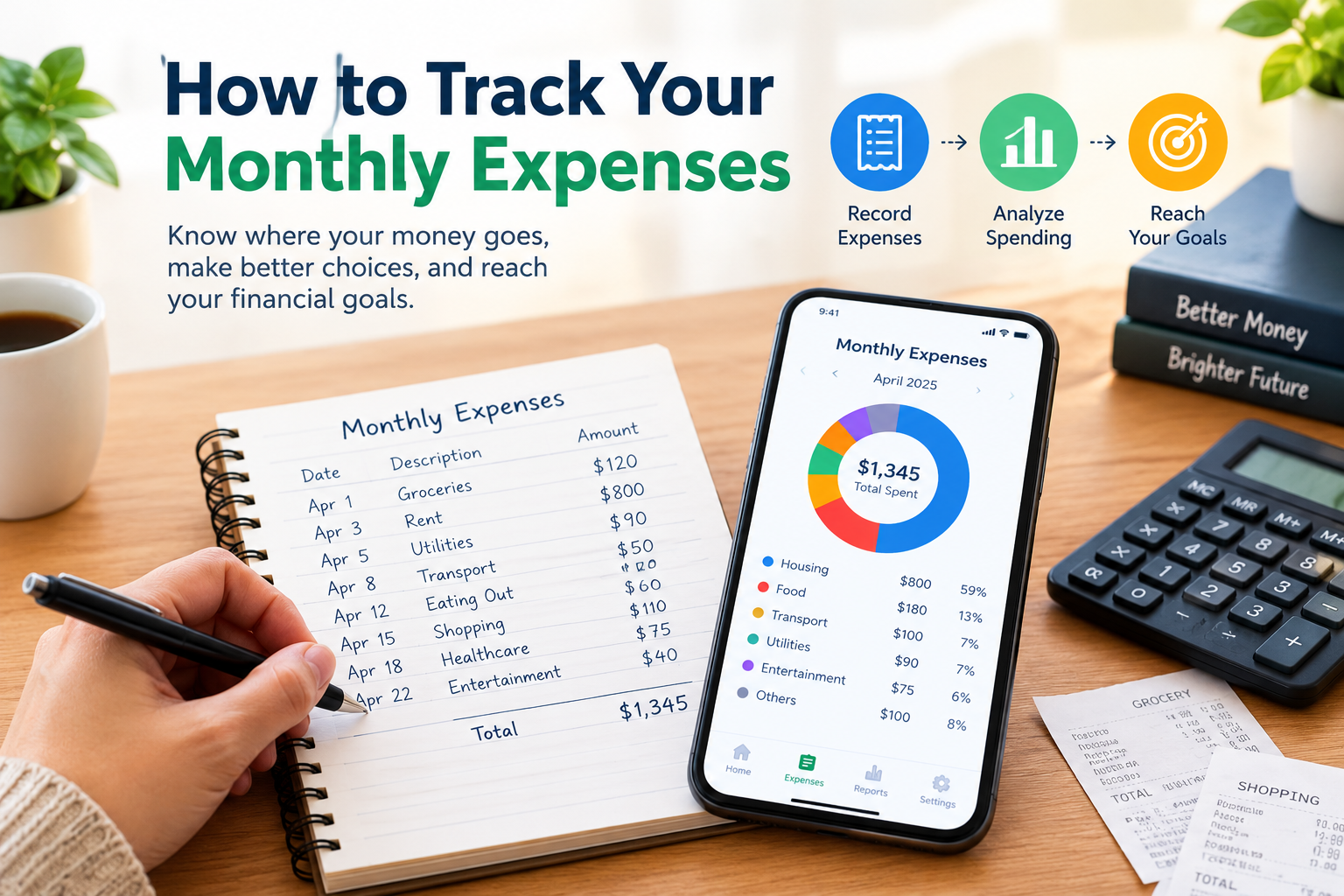
You can track expenses using a spreadsheet, a budgeting app, a notebook, or a simple list on your phone. Choose a method you can maintain consistently.
Whenever you spend money, record the amount and assign it to a category. Review your totals regularly to see how much of each category’s allowance remains.
For example, if your dining budget is $150 and you have already spent $110, you have $40 remaining for the rest of the month.
Tracking your expenses helps you identify patterns. You might discover that several small purchases add up to a significant amount or that a particular bill has increased.
The goal is not to judge every purchase. It is to understand your habits and make informed adjustments before a small problem becomes a larger one.
Step 8: Review and Adjust Your Budget Every Month
A useful budget should change when your circumstances change.
At the end of each month, compare your planned spending with your actual expenses. Look at which categories stayed within their limits, which exceeded them, and whether your savings goals were realistic.
Ask yourself a few questions:
- Did I cover all essential bills?
- Which expenses were higher than expected?
- Did I save the amount I planned?
- Were there unexpected costs I could prepare for next time?
- Do I need to change any spending limits?
If you overspend in one category, identify the reason before changing your plan. A temporary expense may not require a permanent adjustment, but a recurring increase probably does.
Similarly, if you consistently spend less than your planned amount in a category, you may be able to redirect the difference toward savings or debt repayment.
Review your budget whenever you experience a major change, such as a new job, a move, a change in household size, or a significant change in income.
Common Monthly Budgeting Mistakes to Avoid
Beginners often make a few predictable mistakes when they first start budgeting.
1. Setting unrealistic limits
Budgets that are too restrictive can be difficult to maintain. Use realistic estimates and reduce spending gradually where possible.
2. Forgetting irregular expenses
Annual bills, repairs, gifts, and other occasional costs should be included in your planning. Setting aside a monthly amount can make these expenses easier to manage.
3. Ignoring small purchases
Small purchases may seem insignificant individually, but repeated spending can add up. Tracking them helps you decide whether they fit your priorities.
4. Treating savings as whatever is left over
If saving is important to you, give it a place in your budget. Choose an affordable amount and review it regularly.
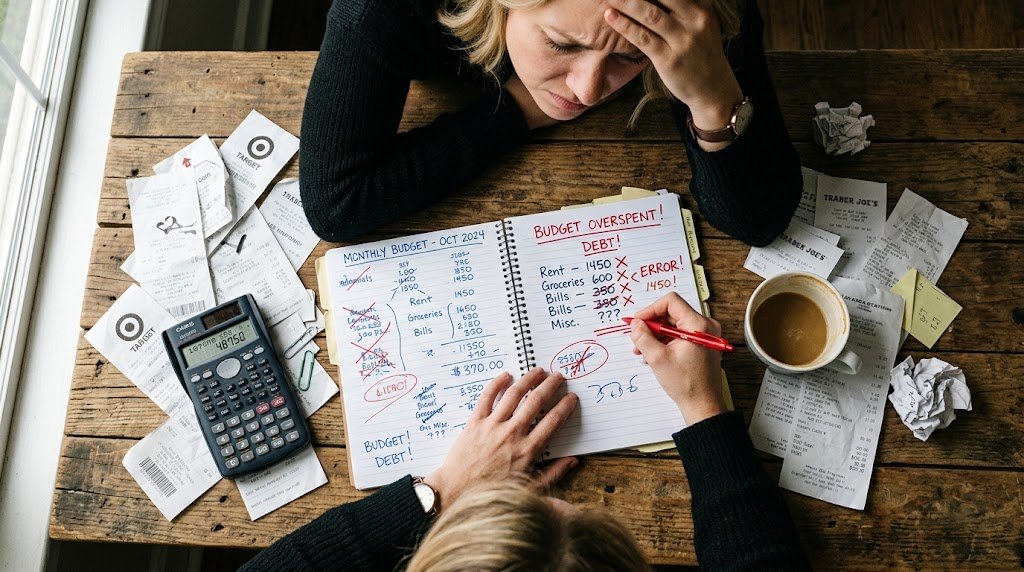
5. Giving up after one difficult month
Unexpected expenses and changes in income happen. Adjust your budget rather than abandoning it entirely.
6. Comparing your budget with someone else’s
Your budget depends on your income, responsibilities, location, and goals. A method that works for another household may not suit yours.
7. Failing to review the plan
A budget that is never updated can quickly become inaccurate. A brief weekly check and a more detailed monthly review can help keep it useful.
Tips for Making Monthly Budgeting Easier
You can make budgeting more manageable by building a few simple habits.
- Review your transactions at the same time each week.
- Use separate savings accounts or clearly labeled savings categories when practical.
- Set reminders for upcoming bills and payment dates.
- Plan groceries and other regular purchases before shopping.

Leave a Reply